

It has been a revealing week for global brand strategy. From Diageo’s recalibration under new leadership to a masterclass in category reinvention from Procell, the message is clear. Growth in 2026 will belong to brands that understand accessibility as deeply as aspiration.
Diageo’s Strategic Pivot Under Dave Lewis
When Dave Lewis stepped into leadership at Diageo, the expectation was immediate momentum. Instead, the market reaction was swift and unforgiving. Shares dropped 13 percent following early signals of his strategic direction.
On the surface, the reaction reflects declining sales. But beneath that, investors were searching for urgency. They wanted decisive cost cutting, sharper restructuring, or a bold acquisition narrative. Instead, Lewis delivered something more nuanced. A commitment to reaching “all consumers.”
That phrase may sound simple, but it signals a philosophical shift.
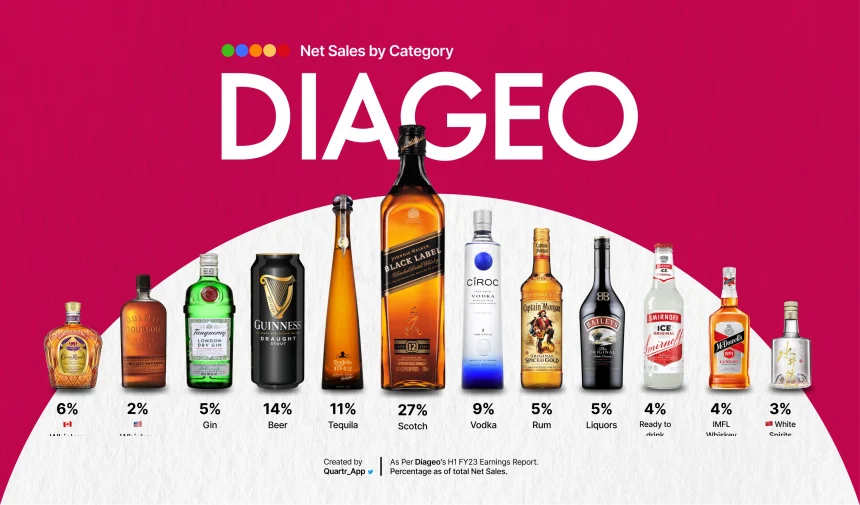
For years, Diageo has been anchored in premiumisation. Brands such as Johnnie Walker, Don Julio, and Guinness were positioned as aspirational purchases, driving margins through elevation. That strategy worked brilliantly in a decade defined by rising disposable incomes and a global appetite for premium experiences.
2026 is different.
Consumers are financially cautious. Trading down is no longer taboo. Affordability is no longer a weakness. It is a strategic lever. Lewis appears to understand that the next wave of growth may not come from pushing consumers higher up the pricing ladder, but from broadening the base.
This is not dilution. It is recalibration.
Reaching all consumers means defending entry points without eroding brand equity. It means building portfolios that stretch from accessible to premium without confusing positioning. And crucially, it means playing the long game. There are no instant wins in repositioning a global drinks giant.
Markets dislike patience. Brand building demands it.
The Procell Lesson: Reinventing B2B in a Low Interest Category
While Diageo navigates global scrutiny, another story this week offered a quieter but arguably more instructive case study.
Procell, the professional battery arm associated with Duracell, has engineered a turnaround in what many would label a low interest category. Industrial batteries are not glamorous. They do not trend on social media. Yet Procell’s strategy has demonstrated the power of precision marketing in B2B environments.
The transformation was not built on flashy campaigns. It was built on clarity.
Clear segmentation. Clear value propositions. Clear communication around efficiency, cost control and reliability. Instead of chasing emotional storytelling, Procell leaned into operational logic. Procurement managers and facilities teams do not buy on aspiration. They buy on performance certainty and total cost of ownership.
That focus reshaped distribution relationships, strengthened trade engagement and repositioned the brand as a specialist rather than a commodity supplier.
It is a reminder that in B2B, marketing excellence is often invisible to consumers but critical to commercial success.
Two Stories, One Strategic Thread
At first glance, Diageo and Procell operate in entirely different universes. One commands global lifestyle brands. The other powers equipment in warehouses and hospitals.
Yet the common thread is relevance.
Diageo must prove its brands are relevant to a wider economic reality. Procell proved relevance by speaking directly to the needs of its buyers rather than relying on brand heritage alone.
In both cases, marketing is not decoration. It is architecture.
The Week Ahead
The broader lesson for marketers is this. Growth will not come from inertia. It will come from courage to adjust.
Premium brands must defend accessibility without surrendering identity. B2B players must embrace the rigour of data driven positioning rather than defaulting to category complacency.
As 2026 unfolds, the brands that win will be those that understand that reach and relevance are not opposites. They are partners in sustainable growth.
Brand Weekly will continue to track how these strategic shifts evolve and what they mean for decision makers navigating an increasingly complex market landscape.