

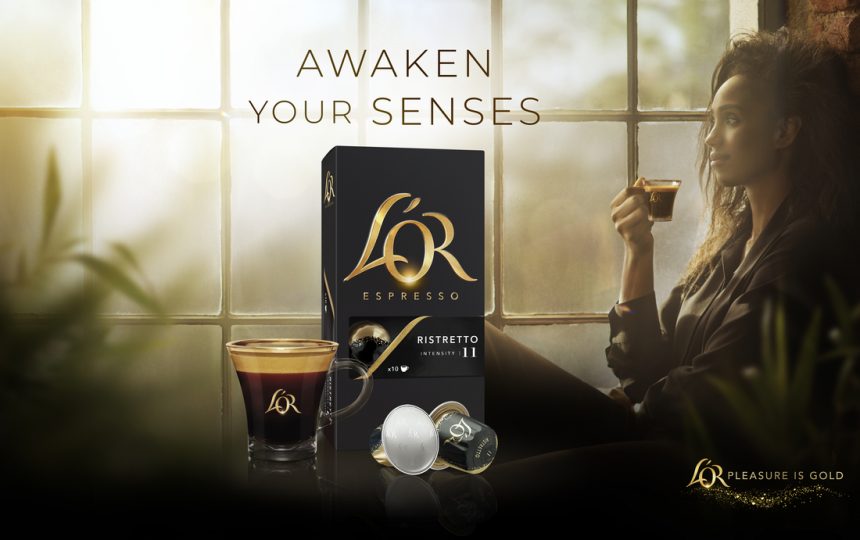
In contemporary brand strategy, prestige is no longer communicated through visibility alone. It is engineered through context, consistency, and cultural alignment.
Few categories illustrate this shift more clearly than premium coffee.
In South Africa’s evolving lifestyle and hospitality economy, coffee has moved beyond its functional role and into the domain of brand expression. It is now a signal of identity—for consumers, for venues, and increasingly for the establishments that serve it.
Within this space, L’OR Espresso has emerged as a case study in how global brands construct and maintain premium positioning in competitive, experience-driven markets.
The Shift From Product to Brand Experience
Traditional beverage marketing relied heavily on product attributes: taste, price, and availability. However, modern premium categories operate differently. The value proposition is no longer contained within the product itself but within the experience surrounding it.
L’OR Espresso’s global positioning reflects this evolution. Rather than presenting coffee as a commodity, the brand frames it as a curated sensory moment—one that blends craftsmanship, design, and ritual.
This approach aligns with broader luxury market behaviour, where consumers are increasingly purchasing meaning rather than objects.
In this context, coffee becomes an emotional and aesthetic experience rather than a transactional one.
Why Hospitality Has Become a Strategic Battleground for Coffee Brands
In South Africa, the hospitality sector has become one of the most influential arenas for brand positioning in the premium food and beverage space.
Hotels, restaurants, and high-end lifestyle venues are no longer passive distribution points. They are brand amplifiers.
Every detail within these environments communicates something about the establishment’s identity. Lighting, plating, service language—and crucially—coffee service all contribute to how a brand is perceived.
For coffee brands, this creates a unique opportunity: the ability to embed themselves within high-value experiential ecosystems.
L’OR Espresso’s positioning within hospitality reflects this shift. Rather than competing solely in retail or home consumption channels, the brand operates in environments where experience defines value perception.
Consistency as the New Currency of Luxury
One of the defining challenges in hospitality coffee service is inconsistency.
Unlike wine programs or kitchen-led menus, coffee is often under-standardised across venues, even at premium level. This inconsistency creates a gap between brand promise and guest experience.
For operators, this gap carries reputational risk.
For coffee brands, it presents a positioning opportunity.
L’OR Espresso’s model is built around addressing this gap through consistency of flavour profile, presentation, and service reliability. In brand terms, this translates into trust—arguably the most valuable currency in premium markets.
Where hospitality venues struggle with variability in execution, brands that can deliver repeatable excellence gain structural advantage.
The Rise of “Invisible Branding” in Premium Venues
A notable shift in modern brand strategy is the move toward what industry analysts often describe as “invisible branding”—where brand influence is felt rather than explicitly seen.
In luxury hospitality environments, overt branding is increasingly being replaced by experiential integration. The product becomes part of the guest journey rather than a promotional element within it.
L’OR Espresso fits within this framework. Its presence in hospitality spaces is not defined by aggressive visibility, but by experiential consistency.
This subtlety is important. In premium environments, overt branding can sometimes dilute perceived sophistication. Instead, alignment with quality moments becomes the primary branding mechanism.
The brand is therefore not just present in the space—it is embedded in the ritual.
Coffee as a Marker of Institutional Identity
For hotel groups and restaurant owners, coffee has historically been viewed as a secondary operational line item.
However, in modern hospitality economics, it is increasingly recognised as a strategic identity marker.
Guests rarely comment on average coffee. But they consistently remember exceptional coffee—and equally, they remember poor experiences.
This creates asymmetric brand risk and reward.
As a result, coffee selection is now beginning to resemble other high-consideration hospitality decisions, such as wine lists, supplier partnerships, and interior design choices.
L’OR Espresso’s positioning within this dynamic reflects a broader shift: coffee is no longer an afterthought. It is part of institutional storytelling.
Brand Prestige in a Localised Market Context
South Africa presents a particularly interesting case for global premium brands.
The market is simultaneously highly sophisticated and highly price-sensitive. Consumers are globally aware, but operational realities across hospitality venues vary significantly.
This duality requires brands to occupy a careful middle ground—balancing accessibility with aspiration.
L’OR Espresso’s positioning reflects this tension. It operates within the premium category while maintaining operational adaptability across different hospitality tiers.
In brand terms, this is a balancing act between exclusivity and scalability.
Few brands manage this effectively without diluting perceived value. Those that do often achieve long-term category leadership.
The Strategic Implication for Hospitality Operators
From a brand perspective, the implications for hotel and restaurant owners are increasingly clear.
Coffee is no longer a background utility. It is a reputational asset.
In a market where guest reviews, social perception, and experiential consistency directly influence business performance, every touchpoint carries measurable brand weight.
This includes the final cup served at the end of a dining experience or the first coffee offered during a hotel stay.
For operators seeking to strengthen brand equity, alignment with a premium, globally recognised coffee identity becomes part of broader positioning strategy.
Not as marketing decoration—but as operational brand architecture.
Conclusion: The Quiet Power of Category Leadership
L’OR Espresso’s presence in South Africa’s hospitality landscape reflects a broader evolution in how brands build authority in modern consumer markets.
Prestige is no longer defined by loud visibility or aggressive marketing alone. It is defined by integration, consistency, and the ability to enhance experience without overshadowing it.
In this sense, coffee becomes more than a product category. It becomes a platform for brand expression across hospitality ecosystems.
And for brands operating at the intersection of luxury and accessibility, the real opportunity lies not in being seen everywhere—but in being experienced meaningfully, in the right places, at the right moments.
In South Africa’s competitive hospitality economy, that distinction is becoming the difference between presence and influence.